Why Distributed HR Teams Lose the Benefits Compliance Thread and What Closes the Gap
Automated location tracking and connected systems close the compliance gaps distributed HR creates.
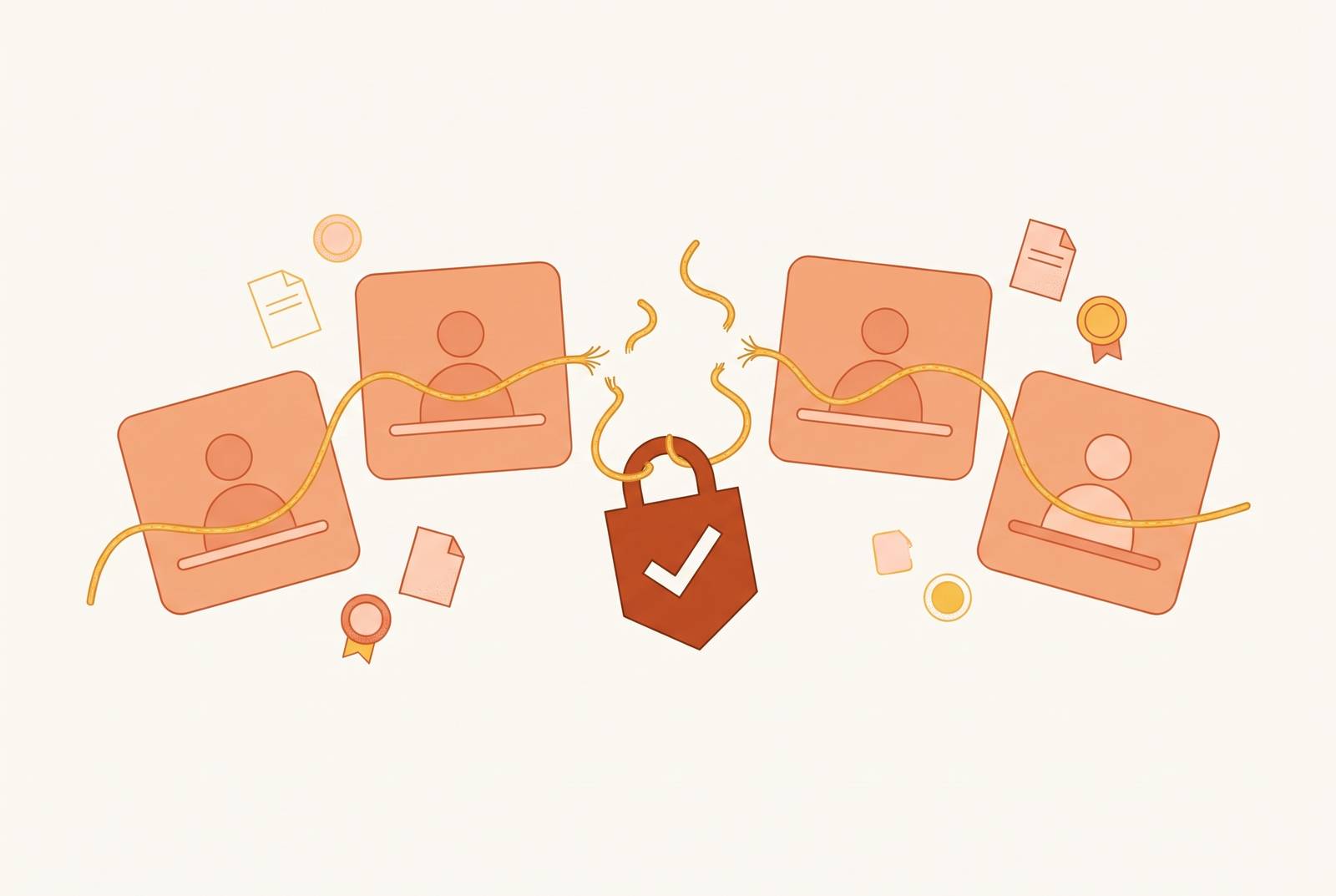
Distributed HR teams lose the benefits compliance thread when work-location changes, disconnected systems, and inconsistent processes separate legal obligations from the events that trigger them. Automated benefits compliance monitoring for a workforce that spans jurisdictions needs continuous location monitoring, workflows that connect to each other, and jurisdiction-aware rules. Knowing the policy alone cannot fix how the work gets done.
Why location is the unit of compliance for distributed teams
Employment law obligations attach to where an employee physically performs work. A headquarters-based policy cannot stand in for the requirements that apply wherever employees work. The employee’s location determines which obligations enter the process. It is therefore operational data.
A company based in one state and hiring remotely into five others must operate across distinct wage regimes, leave frameworks, payroll tax structures, and increasingly, AI-governance frameworks. Those requirements do not arrive as a single package with a shared deadline. Each jurisdiction introduces rules that intersect with the employer’s existing payroll, benefits, and employment practices. Temporary work can also create exposure. An employee working from a vacation rental in another state for a week can trigger tax obligations there, even though the employer still considers the employee based elsewhere.
Consequently, expansion adds more than another location to a roster. To meet its obligations, a distributed team first needs records that show where work actually happens.
How untracked work-location changes become the first systemic failure point
Multi-state payroll compliance often fails because work-location records are missing or out of date. Distributed work makes that information gap particularly likely because a physical move does not automatically become an administrative event. Unless a process captures the change, HR, payroll, and benefits administration may receive no notification. The employee has moved, but the records have not. Decisions then continue to use a jurisdiction that no longer describes the work.
This is a data failure before it becomes a legal one. A permanent relocation and a temporary change both require a way for the new location to enter the compliance process. Without that connection, the employer lacks reliable information about which requirements apply in a new jurisdiction. Some states establish payroll tax nexus from the first employee, while others use thresholds. An employer cannot assess which threshold it has crossed using an incomplete account of its workforce locations.
Delay also narrows the time available to respond. State payroll registration can take days to weeks, so discovering a move does not mean the employer can immediately complete the required administrative work. Withholding deadlines may already be approaching or have passed. Employee self-reporting does not eliminate that exposure because reporting is inconsistent, while the obligation remains with the employer.
The specific obligations that multiply once a location change goes undetected
An undetected move can create several obligations at once. When an employee works in a new state, the employer typically must register, withhold state income tax, and in many cases contribute to that state’s unemployment insurance. Discovering the move therefore exposes a cluster of unfinished work.
Leave obligations add another timetable to that cluster. Paid Family and Medical Leave programs are among the compliance obligations growing fastest for multi-state employers, and states keep updating their rules to account for remote work. Local taxation introduces a further jurisdictional layer. Pennsylvania alone has 2,500 local taxing authorities, and employers must register with each one separately. A process that recognizes the state but not the locality can therefore capture the move and still miss the relevant obligation.
Pay transparency laws in Colorado, California, Washington, New York, Illinois, and Massachusetts apply to remote job postings tied to or performable from those states, depending on the applicable requirements. A remote posting can therefore trigger disclosure obligations in several jurisdictions at once. The recruiting process enters the same geographic problem as payroll, but at a different point in the employment cycle.
These overlapping requirements make late discovery expensive. Late payroll tax filings bring percentage-based penalties each month, so the amount at risk can grow while the team registers and corrects its filings. The operational difficulty is the combination of the number of rules, concurrent duties, different agencies, and deadlines that do not wait for internal reconciliation.
Why fragmented tooling makes location-driven obligations invisible at the moment they arise
Disconnected systems separate a recorded work-location change from the function responsible for responding. An employee’s work location may be right in the HRIS while payroll still uses an older record on another platform. In that arrangement, the tax-registration trigger never fires. The organization possesses the information but cannot act on it. Accurate data in one system is not equivalent to an operational handoff.
The same separation appears in benefits administration. A qualifying-life-event change entered in a benefits portal does not automatically update COBRA eligibility tracking in a separate offboarding workflow. A policy telling staff to comply cannot create that connection. The obligation remains invisible to the responsible workflow unless information reaches it in a form that prompts action.
This is an infrastructure limitation. When systems lack a connected trigger, a person must recognize the significance of the change, locate the relevant requirement, and transfer it into another process. Manual reconciliation can bridge individual gaps, but the volume of location changes, life events, and regulatory updates across jurisdictions exceeds what spreadsheets and periodic checks can reliably track at scale. Every additional handoff adds another point at which an event can remain recorded but unresolved.
How ERISA, ACA, and COBRA obligations slip through distributed offboarding
Federal benefits law creates a distinct compliance cluster because its obligations do not depend on separate state regimes. The distributed failure arises instead from the distance between the triggering event and the team responsible for action. One process can handle a termination or reduction in hours while another handles benefits administration. The legal timeline does not wait for that handoff. Internal awareness and the obligation’s start date can diverge.
COBRA makes this separation particularly consequential. Qualifying events trigger notice duties with strict statutory deadlines for the employer and plan administrator, regardless of whether the HR team has been informed. Offboarding that ends an employment record without activating the relevant benefits workflow leaves those duties exposed. Notice failures can carry per-day, per-employee penalties assessed simultaneously by the IRS and the DOL for the same event.
ERISA brings similar risks even when no one is leaving. Private-sector employers offering welfare benefits have fiduciary and disclosure obligations regardless of headcount, with no small-employer exemption from those duties. When benefits, contribution structures, or eligibility rules change, the relevant plan-document requirements include a Summary of Material Modifications. Distributed teams managing multiple benefits configurations can allow actual plan operations to drift away from the written documents. The failure is a broken connection between a plan change and its required disclosure.
Form 5500 deadlines follow plan-year calendars, and missed filings can attract per-day penalties from both the DOL and the IRS. ACA affordability checks add another monitoring responsibility across workforce configurations. These duties require different triggers, but disconnected administration exposes them to the same failure of coordination.
Policy inconsistency as the third gap when distributed managers apply the same rules differently
Distributed managers can apply the same policy differently when centralized systems and standardized workflows are absent. Working in the same place gives people chances to build shared routines that may be lost when they work apart. Without an operational substitute, the compliance decision depends too heavily on who handles it.
Onboarding makes that dependence visible early. New-hire notices, tax forms, and required disclosures vary by state and sometimes by locality, so a general checklist may not contain the documents an employee needs. Outdated documents create a similar problem even when the checklist is followed. Handbook management extends the burden across employment. The handbook must reflect the laws where employees work, and the wording in its different versions must stay consistent as leave laws and wage requirements change mid-year.
Federal FMLA intersects with state-specific leave laws and paid sick time rules, making the employee’s location part of the correct decision. Applying one standard everywhere can therefore be inconsistent with the law, even when a manager intends to treat everyone alike. Uniform treatment is not always compliant treatment. Consistency requires applying the appropriate rule through the same dependable process.
Differences in treatment also affect internal equity. Employees facing the same situation may distrust unexplained differences, while inconsistent application can in some cases produce discrimination claims. Employers must distinguish legally required variation from discretionary inconsistency. A common policy without jurisdiction-aware execution cannot reliably make that distinction.
Why one-time policy audits do not close any of these gaps
A policy audit captures compliance at a particular moment. A location change the following week or a leave-law amendment the month after falls outside that snapshot and follows its own timetable. Because the gaps open continuously, a periodic review can identify past exposure without preventing new exposure from arising between reviews.
Audits can still find flaws in records, documents, and processes. However, identifying a missing connection between HRIS and payroll does not create the data flow that would prevent the same failure from recurring. Updating a handbook likewise does not ensure that managers follow its jurisdiction-specific rules the same way. Detection and prevention perform different jobs.
The underlying compliance surface also keeps expanding as obligations intersect with AI adoption, employee data management, and remote work. A team relying on annual or quarterly reviews must repeatedly reconstruct what happened since the last review. Meanwhile, penalties accumulate on the obligation’s timeline. Audits support oversight, but they cannot substitute for controls operating when the relevant event occurs.
How to keep benefits compliance up to date automatically with continuous monitoring, automated workflows, and jurisdiction-aware infrastructure
Closing these gaps requires a structural response to each failure point. Continuous location monitoring fills in missing data by bringing permanent and temporary work-location changes into the process as compliance events. Those events must activate the relevant registration, withholding, and leave-program obligations before the next payroll cycle. Capturing an address change alone is insufficient. The operational requirement is to connect the change to the jurisdictional response it requires.
Automated workflows address the separation between a triggering event and action. COBRA notice clocks, ERISA document updates, and ACA affordability checks must connect directly to the relevant termination, benefit change, or reduction in hours rather than wait for a separate administrative review. Jurisdiction-aware onboarding and offboarding address inconsistent execution. At hire, the correct notices, tax forms, and disclosures should be generated for the employee’s actual work location instead of assembled manually from a general checklist.
For platform assessment, the relevant criteria are federal, state, and local coverage, continuous regulatory monitoring, and automated responses within existing workflows. A system that stores location information offers a different capability from one that uses a location change to initiate compliance work. Similarly, a regulatory update is not the same as an operational response. The distinction is whether the information changes what the responsible team must do at the relevant time.
For tech companies operating across multiple states, an AI-native benefits and HR operations platform layered over an existing HRIS can provide this structure without a system replacement or co-employment arrangement. Monitoring across thousands of jurisdictions, automated notice workflows, and around-the-clock employee support are relevant capabilities, but the label alone establishes nothing. The test is whether location changes, law changes, and qualifying events each generate the correct response within the workflow where the event occurred.